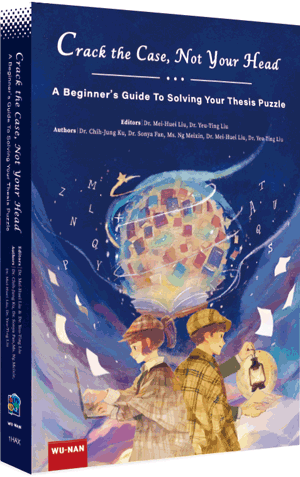
Preface Helping you close your case and get published
Introduction Taking Your Research to Court
INTRODUCTION
SECTION 1. The Research Publishing Challenge…And Why It Feels Like a Courtroom
SECTION 2. The Structure and Logic of a Strong Research Argument
SECTION 3. Partnering with AI: A New Era of Research Writing
What’s Ahead in This Book
CONCLUSION—Think like a Lawyer, Structure like a Scientist
PARTI Preparing Your Case, or How to Make Your Research Ready for Publication?
Chapter 1 From Moot Court to Supreme Court: Conference Papers vs Journal Articles
INTRODUCTION
SECTION 1. Reasons to Publish … and Your First Steps
SECTION 2. The Real Differences Between Conference Papers and Journal Articles
SECTION 3. Four Steps to Journal Readiness
CONCLUSION—Start Small, Argue Big Later
Chapter 2 Understanding Your Judges: How Editors and Reviewers Evaluate Your Argument
INTRODUCTION
SECTION 1. Why Peer Review Exists and How It Works
SECTION 2. Learning from Reviewers and Using Feedback to Improve
SECTION 3. Why Papers Get Rejected… and How to Avoid It
CONCLUSION—Know the Judges, Win the Verdict
Chapter 3 Setting Up Your Case: Building Solid Foundations (Introduction & Methods)
INTRODUCTION
SECTION 1. The Research Argument SETUP and Why It Matters
SECTION 2. The Lit Review: The Research Argument CONTEXT
SECTION 3. Justifying the Methods:the Research Argument SETUP
CONCLUSION—Building the Foundations for Your Winning Argument
Chapter4 Defending Your Case: Presenting Strong Evidence and Closing Arguments (Results & Discussion)
INTRODUCTION
SECTION 1. Presenting Your EVIDENCE: Writing the Results Section
SECTION 2. Making Your Case (INTERPRETATION):Writing the Discussion Section
SECTION 3. Connecting, Claiming, and Concluding
CONCLUSION— Seal the Verdict with Clear EVIDENCE and a Persuasive INTERPRETATION
Chapter 5 Which Court Is Best for My Case? Choosing the Right Journal
INTRODUCTION
SECTION 1. Choosing the Right Court
SECTION 2. Four Key Factors to Evaluate a Journal
SECTION 3. Strategic Publishing for Career Goals +Common Pitfalls
CONCLUSION—The Right Court Can Make—or Break—Your Case
Chapter 6 Courtroom Rules: Publishing Ethics
INTRODUCTION
SECTION 1. Authorship Ethics: Giving Credit Where It’s Due
SECTION 2. Responsible Writing and Publication:Being Honest with the Work
SECTION 3. Simple Habits for Ethical Writing
CONCLUSION—Credibility is Your License to Practice
PARTII Defending Your Case, or How to Survive the Peer Review?
Chapter 7 After the Cross-Examination: Responding to Reviewer Feedback I
INTRODUCTION
SECTION 1. Interpreting Reviewer Feedback: Reading the Cross-Examination
SECTION 2 Crafting a Persuasive Response Letter: Your Courtroom Rebuttal
SECTION 3. Revising with Strategy and Resilience: Strengthening Your Case
CONCLUSION—Turn Cross-examination into Your Winning Moment
Chapter 8 When the Jury Gives Mixed Verdicts: Responding to Reviewer Feedback II
INTRODUCTION
SECTION 1. What If the Reviewers Disagree on the Verdict?
SECTION 2. Responding to Conflicting Feedback
SECTION 3. Crafting a Persuasive Response Letter: Speaking to the Judge
CONCLUSION— Find the Common Ground …and Keep the Court on Your Side
PARTIII Promoting Your Courtroom Victory, or How to Boost Your Research’s Impact?
Chapter 9 Establishing Legal Precedent: How to Ensure Your Research Is Seen and Cited
INTRODUCTION
SECTION 1. Writing for the Record: Understanding the Power of Search Engine Optimization (SEO)
SECTION 2. Techniques for Positioning Your Argument to Invite Citation and Scholarly Uptake
SECTION 3. Tools for Tracking and Understanding Your Research’s Academic Impact
CONCLUSION—Make Your Case Part of the Legal Record
Chapter10 Turning Your Verdict Into Action: Driving Change Beyond the Courtroom to Make Your Research Matter
INTRODUCTION
SECTION 1. Science Communication: Why “Writing in Public” Matters
SECTION 2. Building Your Public Profile Strategically
SECTION 3. Engaging Policymakers, Practitioners,and the Public for Real-World Impact
CONCLUSION—From Publication to Public Impact
Parts of A Journal Article
Glossary