|
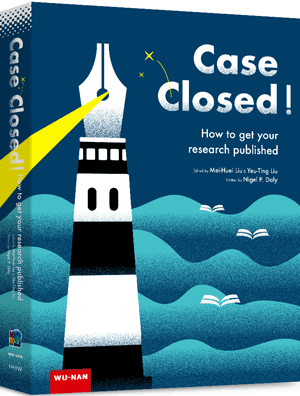
Case Closed! How to get your research published
|
|
|
|
|
作 者╱
|
Nigel P. Daly
|
|
出版社別╱
|
五南

|
|
出版日期╱
|
2026/09/01
(1版 1刷)
|
|
|
I
S B N ╱
|
978-626-442-258-1
|
|
書 號╱
|
1H1W
|
|
頁 數╱
|
456
|
|
開 數╱
|
20K
|
|
定 價╱
|
650 (特價 520)
|
|
|

|
※主編簡介
Mei-Huei Liu, Yeu-Ting Liu
Dr. Mei-Huei Liu
A distinguished professor and provost of National Taiwan Normal University, Dr. Liu works in many areas such as citizenship education, phenomenon-based learning, curriculum development, international education, multicultural education, teacher education, and gender issues.
Dr. Yeu-Ting Liu
Yeu-Ting Liu, Ed.D. is Dean of the School of Teacher Education and Distinguished Professor in the Department of English at National Taiwan Normal University. Trained at Teachers College, Columbia University, his research bridges psycholinguistics and second language acquisition, with a focus on how cognitive traits and multimodal cues shape L2 learning. He has published extensively in SSCI-indexed journals, served as co-editor and associate editor for two leading international journals, reviewed for numerous top-tier publications, and led multiple national research projects in Taiwan.
|

Dr. Nigel P. Daly
Nigel P. Daly has a PhD in TESOL and is a business and academic communications trainer, writer, and researcher specializing in language learning with technology. Based in Taiwan for over 28 years, he has extensive experience in TESOL research and publishing, reviewing and editing research manuscripts, and writes widely in traditional and alternative media on AI, education, and language practice for both professional and public audiences.
|

Preface Helping you close your case and get published
Introduction Taking Your Research to Court
INTRODUCTION
SECTION 1. The Research Publishing Challenge…And Why It Feels Like a Courtroom
SECTION 2. The Structure and Logic of a Strong Research Argument
SECTION 3. Partnering with AI: A New Era of Research Writing
What’s Ahead in This Book
CONCLUSION—Think like a Lawyer, Structure like a Scientist
PARTI Preparing Your Case, or How to Make Your Research Ready for Publication?
Chapter 1 From Moot Court to Supreme Court: Conference Papers vs Journal Articles
INTRODUCTION
SECTION 1. Reasons to Publish … and Your First Steps
SECTION 2. The Real Differences Between Conference Papers and Journal Articles
SECTION 3. Four Steps to Journal Readiness
CONCLUSION—Start Small, Argue Big Later
Chapter 2 Understanding Your Judges: How Editors and Reviewers Evaluate Your Argument
INTRODUCTION
SECTION 1. Why Peer Review Exists and How It Works
SECTION 2. Learning from Reviewers and Using Feedback to Improve
SECTION 3. Why Papers Get Rejected… and How to Avoid It
CONCLUSION—Know the Judges, Win the Verdict
Chapter 3 Setting Up Your Case: Building Solid Foundations (Introduction & Methods)
INTRODUCTION
SECTION 1. The Research Argument SETUP and Why It Matters
SECTION 2. The Lit Review: The Research Argument CONTEXT
SECTION 3. Justifying the Methods:the Research Argument SETUP
CONCLUSION—Building the Foundations for Your Winning Argument
Chapter4 Defending Your Case: Presenting Strong Evidence and Closing Arguments (Results & Discussion)
INTRODUCTION
SECTION 1. Presenting Your EVIDENCE: Writing the Results Section
SECTION 2. Making Your Case (INTERPRETATION):Writing the Discussion Section
SECTION 3. Connecting, Claiming, and Concluding
CONCLUSION— Seal the Verdict with Clear EVIDENCE and a Persuasive INTERPRETATION
Chapter 5 Which Court Is Best for My Case? Choosing the Right Journal
INTRODUCTION
SECTION 1. Choosing the Right Court
SECTION 2. Four Key Factors to Evaluate a Journal
SECTION 3. Strategic Publishing for Career Goals +Common Pitfalls
CONCLUSION—The Right Court Can Make—or Break—Your Case
Chapter 6 Courtroom Rules: Publishing Ethics
INTRODUCTION
SECTION 1. Authorship Ethics: Giving Credit Where It’s Due
SECTION 2. Responsible Writing and Publication:Being Honest with the Work
SECTION 3. Simple Habits for Ethical Writing
CONCLUSION—Credibility is Your License to Practice
PARTII Defending Your Case, or How to Survive the Peer Review?
Chapter 7 After the Cross-Examination: Responding to Reviewer Feedback I
INTRODUCTION
SECTION 1. Interpreting Reviewer Feedback: Reading the Cross-Examination
SECTION 2 Crafting a Persuasive Response Letter: Your Courtroom Rebuttal
SECTION 3. Revising with Strategy and Resilience: Strengthening Your Case
CONCLUSION—Turn Cross-examination into Your Winning Moment
Chapter 8 When the Jury Gives Mixed Verdicts: Responding to Reviewer Feedback II
INTRODUCTION
SECTION 1. What If the Reviewers Disagree on the Verdict?
SECTION 2. Responding to Conflicting Feedback
SECTION 3. Crafting a Persuasive Response Letter: Speaking to the Judge
CONCLUSION— Find the Common Ground …and Keep the Court on Your Side
PARTIII Promoting Your Courtroom Victory, or How to Boost Your Research’s Impact?
Chapter 9 Establishing Legal Precedent: How to Ensure Your Research Is Seen and Cited
INTRODUCTION
SECTION 1. Writing for the Record: Understanding the Power of Search Engine Optimization (SEO)
SECTION 2. Techniques for Positioning Your Argument to Invite Citation and Scholarly Uptake
SECTION 3. Tools for Tracking and Understanding Your Research’s Academic Impact
CONCLUSION—Make Your Case Part of the Legal Record
Chapter10 Turning Your Verdict Into Action: Driving Change Beyond the Courtroom to Make Your Research Matter
INTRODUCTION
SECTION 1. Science Communication: Why “Writing in Public” Matters
SECTION 2. Building Your Public Profile Strategically
SECTION 3. Engaging Policymakers, Practitioners,and the Public for Real-World Impact
CONCLUSION—From Publication to Public Impact
Parts of A Journal Article
Glossary
|

|
|
|

Chapter 5 Which Court Is Best for My Case?Choosing the Right Journal
Choosing the right journal can make the difference between acceptance and rejection. This chapter guides you through evaluating journals so you can target those most likely to publish—and value—your work.
By the end of this chapter, you will learn how to:
• Match your paper to the right journal based on scope, audience, and goals.
• Evaluate journals using key metrics like indexing, impact, and access.
• Spot red flags and avoid predatory or low-quality journals.
• Build a short, realistic list of target journals that fit your research and career stage.
Contents
SECTION 1. Choosing the Right Court
1.1 The Six Main Journal Types (and Who They’re For)
1.2 Red Flags and Predatory Journals: Avoiding the Trap
SECTION 2. Four Key Factors to Evaluate a Journal
2.1 Indexing, Impact, and Visibility: What Really Counts
2.2 Turnaround Time and Open Access: Speed vs. Reach
2.3 Scope, Fit, and Submission Guidelines: Know the Rules
2.4 Peer Review and Audience: Who’s Watching? Who Cares?
SECTION 3. Strategic Publishing for Career Goals + Common Pitfalls
3.1 Strategic Publishing: What’s the Goal of this Paper?
3.2 How to Build a Shortlist (and Have a Plan B)
3.3 Checklist, Mistakes, and Final Advice
INTRODUCTION
In Chapter 1, we said that publishing a paper is like presenting your case in a courtroom: your manuscript is your evidence and argument, and peer reviewers are the judges.
But here’s the catch—not every courtroom plays by the same rules.
Imagine you have a case to present. Should you go to the Supreme Court, a local court, a special tribunal, or a community hearing? Each court has different rules, expectations, and types of judges. Some are strict and formal, others are smaller and more focused, and a few are quick and flexible.
Choose the wrong one and your case never even gets heard, no matter how brilliant it is.
Academic journals are like those courts. Some journals want major cases: big discoveries that will change the field. Others want focused cases: technical studies or regional reports. Some courts (journals) are overloaded with submissions and take a long time to reach a verdict. Others are faster but may not carry the same weight on your academic record.
This chapter will help you understand which kind of journal“courtroom” best fits your research paper, your goals, and your career stage. We have already discussed the benefits of publishing in earlier chapters and revising your conference paper for publication, so now it’s time to choose the right journal. This is a critical step in the publication process. It's not always easy, and we should not forget how sky-high the
rejection rates for good journals can be.
WATCH OUT!
As Belcher points out, “Most journal articles aren’t suitable for top journals, being too narrow in claim, evidence, or argument”.
So, you need to understand the types of journals out there, understand the level of your research, and then be strategic in publishing it. |
|
|
|